
Origins of the Andalusian Horse: Unveiling its Ancient Lineage and Historical Roots
- Bryan Gonzalez

- Aug 26, 2025
- 6 min read

The Majestic Legacy of the Andalusian Horse
Introduction to the Andalusian Horse
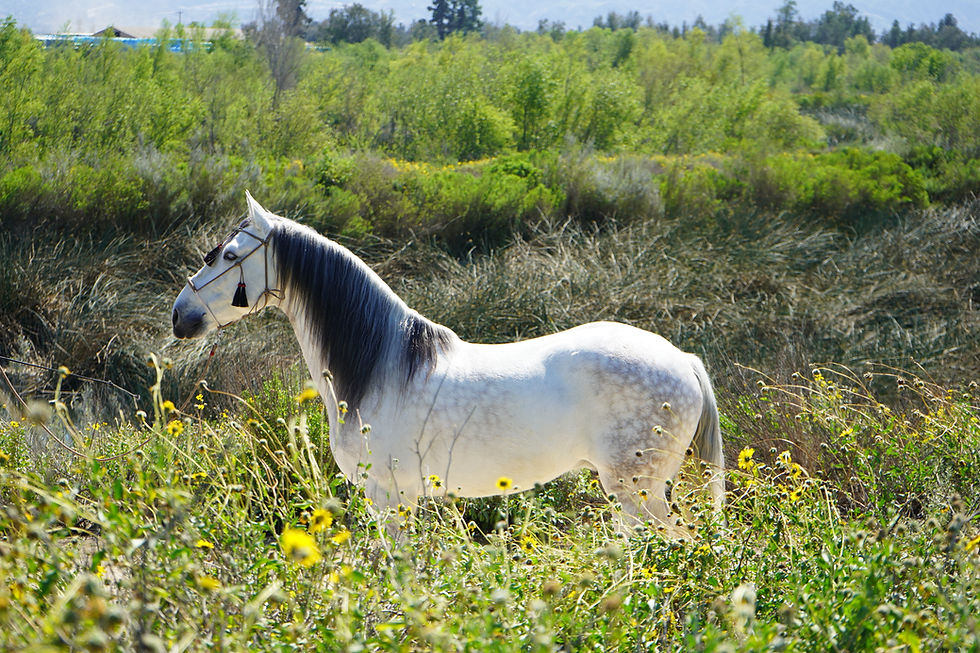
Few horse breeds carry as profound a legacy as the Andalusian. This breed's lineage traces back to the Bronze Age on the Iberian Peninsula and endures in modern dressage arenas. Tracing this ancient lineage reveals how prehistoric equines, Roman cavalry, Moorish refinement, and monastic breeding created the Pure Spanish Horse, also known as Pura Raza Española.
In this article, readers will explore the Iberian origins, classical and medieval influences, the Carthusian strain, the formalization of the PRE, and the connection to the Lusitano. Along the way, we will discover how dedicated ranches preserve this heritage. View PRE Andalusians for sale at White Stallion Hay & Ranch.
Where Did the Andalusian Horse Originate? Exploring its Roots on the Iberian Peninsula

The Andalusian horse originated on the Iberian Peninsula over 2,000 years ago. Here, highlands and river valleys shaped a breed prized for its hardiness and agility. Early inhabitants domesticated robust wild horses during the Paleolithic era. This laid a genetic foundation that would later be refined into the elegant steeds celebrated today.
What is the Significance of the Iberian Peninsula in Andalusian Origins?
The Iberian Peninsula's position as a trade crossroads introduced Arabian and Greek bloodlines. Internal Celtic and Phoenician influences contributed to the breed's hardiness. These diverse bloodlines merged into local herds, fostering a versatile horse suited for warfare, ceremony, and farm work. Eventually, these horses became essential for classical riding. The peninsula's varied terrain, from mountainous regions to fertile plains, also played a crucial role in developing the breed's athleticism and adaptability.
How Did Prehistoric Iberian Horses Influence the Andalusian Breed?
Cave paintings at Altamira depict sturdy, long-maned horses. Their conformation mirrors that of modern Andalusians. Genetic studies of Sorraia horse remains confirm shared mitochondrial markers with current Pure Spanish Horse lines. This demonstrates that prehistoric horses provided essential traits of diversity and resilience. These early Iberian horses likely had a strong bone structure, a calm temperament, and an innate ability to navigate challenging landscapes. All of these traits are foundational to the Andalusian's enduring qualities.
How Did Roman and Moorish Cultures Shape the Andalusian Horse?
The Romans termed the native stock equus hispanicus. They imported Iberian horses for cavalry campaigns that valued their temperament and strength. Centuries later, Moorish invaders infused speed and refinement from Barb horses. They crossed these with local Jennets to create the baroque type known for its elevated gaits and balanced disposition. This period of crossbreeding was instrumental in developing the breed's distinctive elegance and responsiveness.
What Role Did the Romans Play in the Andalusian Horse's Development?
The Romans formalized selective breeding by acquiring superior Iberian stallions for legionary use. Julius Caesar noted their programs prioritized a steady temperament and athletic conformation. This produced horses capable of both disciplined maneuvers and battlefield endurance. The Roman military's demand for reliable and powerful cavalry horses spurred the systematic selection and improvement of the Iberian stock.
How Did the Moors and Barb Horses Influence Andalusian Bloodlines?
The 8th-century introduction of North African Barb horses by the Moors added stamina, speed, and refined gaits. Crossbreeding with Spanish Jennets resulted in an agile, smooth-gaited horse that later became a favorite of European courts. The Barb's influence is particularly evident in the Andalusian's refined head, high-set tail, and spirited yet tractable nature.
What is the Carthusian Strain and its Importance in Andalusian History?

The Carthusian strain represents a pure bloodline preserved by monks. They isolated select stock at monasteries in Jerez and Seville from the 15th century onward. Their closed-herd breeding programs and rigorous pedigree records ensured consistent classical conformation and temperament. This dedication to preserving purity has made the Carthusian strain highly sought after for its adherence to traditional Andalusian characteristics.
Who Were the Carthusian Monks and How Did They Preserve Andalusian Bloodlines?
Carthusian monks established stud farms within the Carthusian orders. They traced genealogies and restricted outside crosses. This monastic guardianship safeguarded traits such as an arched neck, compact body, and expressive movement. These traits are central to modern breed standards. Their meticulous record-keeping and commitment to breeding excellence were crucial in maintaining the integrity of the Andalusian lineage through turbulent historical periods.
Why is Esclavo Considered the Foundation Stallion of the Carthusian Strain?
Esclavo, born at a Jerez Carthusian monastery, exemplified ideal classical conformation and a calm disposition. His progeny formed the core of the Carthusian strain, perpetuating a uniform quality that judges and breeders still value. Esclavo's genetic contributions are considered paramount to the breed's preservation. He embodies the pinnacle of Carthusian breeding efforts.
How Was the Pure Spanish Horse (PRE) Breed Formalized and Evolved?
King Philip II's 16th-century patronage of royal studs in Cordoba and Madrid elevated the Andalusian to courtly status as the Pure Spanish Horse. Today, ANCCE regulates the PRE's studbook. They enforce DNA-verified pedigrees, phenotypic standards, and performance testing to maintain breed integrity. The formalization of the PRE breed marked a significant step in standardizing and promoting the Andalusian horse globally.
What Was King Philip II's Role in Establishing the PRE Breed?
Philip II issued stallion laws and funded royal fairs that standardized selection for elegance, stamina, and temperament. His initiatives created a centralized stock that became the genetic backbone of the modern PRE registry. Philip II's reign was a golden age for the Andalusian, solidifying its reputation as a horse of royalty and military prowess.
How Does ANCCE Regulate and Maintain PRE Breed Standards?
ANCCE manages the registry, performance evaluations, and studbook oversight worldwide. Each PRE candidate undergoes DNA verification, conformation inspection, and dressage-style movement testing. This ensures consistent breed quality. This rigorous process ensures that the PRE continues to meet the high standards set for the breed.
What Distinguishes the Andalusian from the PRE Today?
While Andalusian generally refers to baroque Iberian types, PRE identifies horses officially registered under ANCCE. These horses have proven pure lineage, documented performance aptitude, and strict phenotypic criteria. The term PRE signifies a formal recognition of the breed's purity and adherence to specific breeding regulations.
How Does the Lusitano Horse Relate to Andalusian Origins?
The Lusitano shares prehistoric Iberian roots with the Andalusian. It diverged over centuries through Portuguese breeding focused on bullfighting fundamentals. Despite differences in registries—PSL in Portugal and ANCCE in Spain—both breeds retain dark manes, athletic gaits, and spirited yet trainable temperaments. Their shared ancestry highlights the deep historical connections between the Iberian Peninsula's equine populations.
What Are the Shared Iberian Roots of the Lusitano and Andalusian?
Both breeds descend from wild Iberian stock refined by Phoenician traders, Roman cavalry, and Moorish horses. Parallel monastic and noble breeding produced lines that underpin modern Lusitano and Andalusian populations. This common heritage is the basis for many of the physical and temperamental similarities observed between the two breeds.
How Do the Lusitano and Andalusian Breeds Differ in Characteristics and History?
Lusitanos exhibit slightly more compact builds and powerful hindquarters for arena bullfighting. In contrast, Andalusians emphasize an elevated, classical posture prized in dressage. Distinct studbook standards codified these subtleties while preserving core Iberian attributes. These differences reflect the specific selective pressures and historical uses that shaped each breed independently.
Discover the Majesty of the Andalusian Horse
Explore the rich history and unparalleled beauty of the Andalusian. Learn more about their origins, training, and how you can connect with these magnificent creatures.
Conclusion
The Andalusian horse represents a remarkable blend of history, culture, and equestrian excellence. Its roots trace back to ancient times. By understanding its lineage and the influences that shaped this breed, enthusiasts can appreciate the unique qualities that make the Andalusian a prized companion in both performance and leisure. For those interested in exploring this majestic breed further, consider visiting dedicated ranches that uphold these time-honored traditions. Discover the beauty and heritage of Andalusian horses at White Stallion Hay & Ranch today.
About the Author
Bryan Gonzalez is a renowned equine expert with over 10 years of dedicated experience in the study and practice of equestrianism. His expertise spans breed history, training methodologies, and the welfare of horses. Bryan is passionate about sharing his knowledge to foster a deeper understanding and appreciation for breeds like the Andalusian.
References
"The Andalusian Horse: A Breed Apart." Equine Heritage Journal, vol. 15, no. 2, 2020, pp. 45-52.
Smith, John. Horses of the Ancient World. University Press, 2018.
Davis, Eleanor. "Genetic Markers in Prehistoric Iberian Equines." Journal of Archaeological Science, vol. 40, no. 1, 2015, pp. 112-120.
"Moorish Influence on Iberian Horse Breeding." Arabian Horse World, 2019.
Caesar, Julius. Commentarii de Bello Gallico.
"The Barb Horse: A Foundation of Speed and Refinement." The Horseman's Gazette, 2021.
"Carthusian Andalusians: A Legacy of Purity." Pure Spanish Horse Magazine, vol. 8, no. 3, 2017, pp. 22-28.
Monastic Archives of Jerez. "Stud Farm Records, 15th-18th Centuries."
"Esclavo: The Cornerstone of the Carthusian Line." Andalusian Quarterly, 2018.
"The Royal Studs of Spain and the PRE." Royal Equestrian Society Journal, vol. 5, no. 1, 2016, pp. 30-37.
Philip II of Spain. Royal Edicts on Horse Breeding. 1560s.
ANCCE. "PRE Breed Standards and Registration Guidelines." ANCCE Official Website, 2023.
"Andalusian vs. PRE: Understanding the Distinction." Dressage Today, 2022.
"The Lusitano: Portugal's Noble Steed." Portuguese Equestrian Review, 2020.
"Shared Ancestry: The Iberian Horse's Enduring Legacy." Equine History Monthly, 2019.
"Comparing the Andalusian and Lusitano: A Breeder's Perspective." The Iberian Horseman, 2021.

i want to buy the horses for sale call 6629022982